Before we learn about way of responding the CP2000 notice , let us first understand what is a CP2000 notice , why it is issued and how long it takes to resolve such a notice .
Table of Contents
What is a CP2000 notice?
Under the Internal Revenue Code, in many types of income, persons paying you amounts are required to report such an income to IRS in a designated forum. So, when you receive Form W2, Form 1099-MISC, Form 1099-DIV, Form 1099-INT, 1098, 5498, etc., IRS also get one copy electronically. The data in these forms are matched with the tax return filed by you. IRS generally does this matching work three times in a year and if the system finds out any discrepancy in reporting the income a notice is issued you . This is IRS CP2000 notice wherein based on the mismatched data , additional taxes, penalties, and interest my be proposed vide CP2000.
Is CP2000 notice considered a notice after IRS audit ?
The simple answer is: No. A CP 2000 notice is issued by a machine verified mismatch in your reported income with the authentic data available with IRS. So, the CP2000 can not be equated with a notice of demand after an IRS audit.
How long does it take to resolve a CP2000 notice ?
Generally speaking, six months. Once you receive the notice and filed a timely response, then the issue will resolve quickly. In general, it takes one to six months depending upon the backlog with IRS and how quickly you responded to CP2000.
How to handle a CP2000 notice?
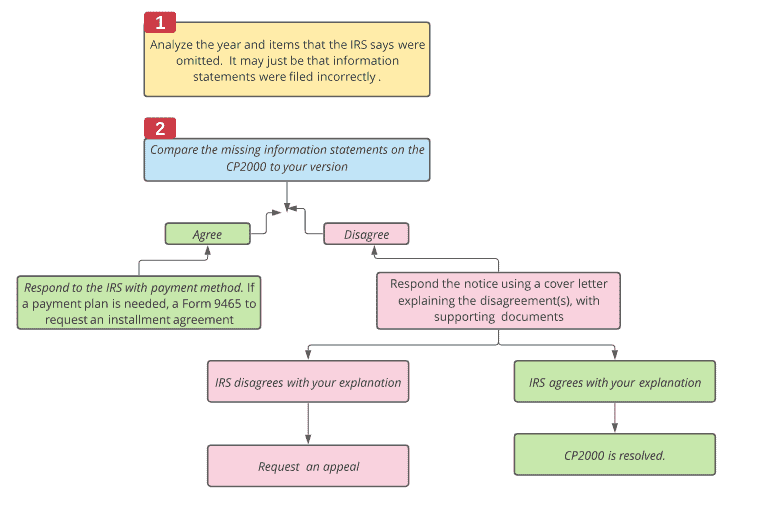
First thing is to file a reply /response in a timely manner. After examining the notice carefully, if you find any error or mistake in the notice, file a dispute to any penalties.
If you missed the CP2000 deadline, request reconsideration by following CP2000 reconsideration procedures.
Taxpayers can request by filing Form 656-L to IRS for reconsidering the CP2000 through an Offer in compromise- doubt as to liability.
Can you appeal a CP2000 disagreement?
You can request an IRS appeal if the IRS tax examiner disagrees with the response. If the IRS disagrees and you do not request an appeal, the IRS may automatically proceed to assessing the tax. If you timely request an appeal, the IRS must send your case to the IRS Office of Appeals for reconsideration.
Post Disclaimer
While the information on this site - Internal Revenue Code Simplified-is about legal issues, it is not legal advice or legal representation. Because of the rapidly changing nature of the law and our reliance upon outside sources, we make no warranty or guarantee of the accuracy or reliability of information contained herein.